Evaluating E-Learning Materials for Compliance with WCAG 2.0 and WCAG 2.1
Remote working has recently become much more popular. It can significantly reduce a company's costs and make it more accessible and flexible for customers. The situation is similar with...
Remote working has recently become much more popular. It can significantly reduce a company's costs and make it more accessible and flexible for customers.
The situation is similar with education. There is a vast number of online courses that provide the knowledge needed to run all kinds of activities. Without leaving home, you can become a personal trainer, a volleyball or other sports coach, or start programming in newly learnt languages.
Some time ago, MEN (the Polish Ministry of National Education) introduced the e-podręczniki (e-textbooks) system, enabling primary and secondary school pupils to learn remotely from home. In this way, pupils can work through interactive materials, become familiar with the content and then test the knowledge they have gained by completing tests.
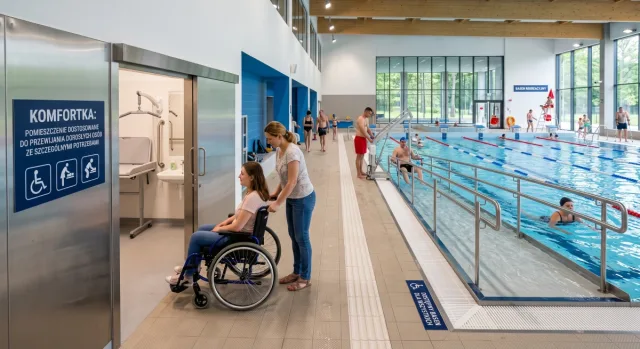
This solution also makes it easier for pupils with certain impairments to access knowledge. However, e-materials have to be specially prepared for them, because not every pupil is able to engage with multimedia content. There are a number of health impairments, such as visual and hearing impairments, that significantly limit access to such materials.
That is why MEN required all e-materials to be accessible, as far as possible, to the same extent for all users. This led to the creation of teams of auditors who check and then identify which elements of the e-materials are inaccessible to people with disabilities. These comments are then passed on to another team – the design team – which replaces the inaccessible materials with alternative materials that will also be accessible to people with disabilities.
Our company is currently taking part in auditing e-materials for their compliance with the WCAG 2.0 standard.